

Apple is rejecting vibe coded apps from the App Store, and the crackdown is hitting harder than most founders expected. In March 2026, Apple quietly blocked updates for popular vibe coding platforms including Replit and Vibecode, citing long-standing rules about executable code. If you shipped a product using AI-generated code, or you're planning to build a mobile app, this is the wake-up call.
If your app was built with vibe coding tools and you're worried about App Store approval, our team can help. Get your vibe-coded app reviewed by real developers before you submit.
What Happened with Apple and Vibe Coded Apps in March 2026
Apple blocked vibe coding platforms from pushing App Store updates without warning. According to reporting from The Information, Apple prevented apps like Replit and Vibecode from releasing updates unless they made significant changes to how their apps work. 9to5Mac confirmed that Apple later clarified it has no rules specifically targeting vibe coding apps, but the enforcement sent a clear message.
The issue is Guideline 2.5.2 in Apple's App Store Review Guidelines. The rule states that apps "may not download, install, or execute code which introduces or changes features or functionality of the app." Vibe coding platforms let users generate and run new applications inside the host app, which Apple considers a violation because the app can become something entirely different after passing review.
Apple rejected nearly 1.93 million app submissions in 2024 alone for failing to meet quality, safety, or business guidelines, according to Apple's annual Transparency Report.
The timing matters. Vibe coding tools have flooded the App Store with new submissions. Developers are now reporting that review queues are stretching to three days or longer, up from the typical 24-hour turnaround. Apple's review team is overwhelmed, and established developers are paying the price.
Why Apple's Review Process Catches Vibe Coded Apps
Apple's App Store review is designed to evaluate what an app does at the time of submission. Vibe coded apps break that model because they can generate entirely new functionality after approval. That's the core conflict.
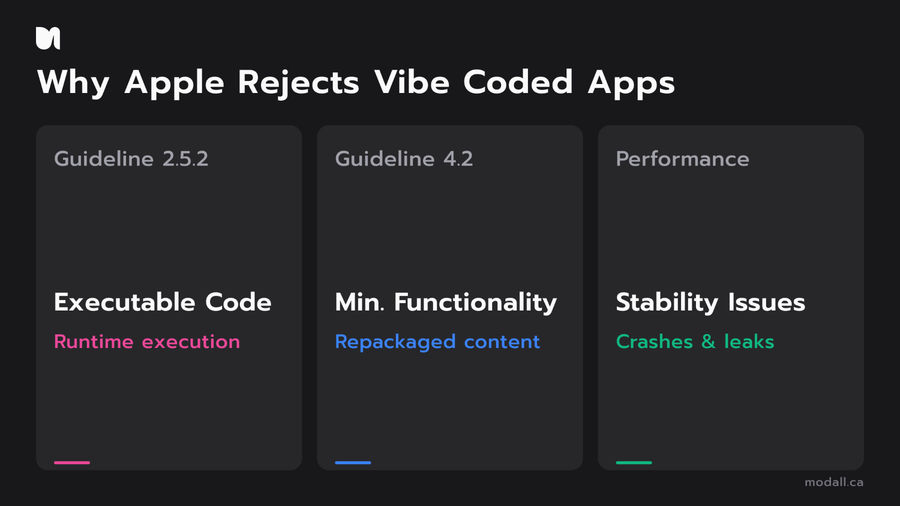
Here's what the review process typically flags:
Review Check | What It Catches | Why Vibe Code Fails |
|---|---|---|
Guideline 2.5.2 (Executable Code) | Apps that download or run code post-approval | Vibe coded apps generate and execute new code at runtime |
Guideline 4.2 (Minimum Functionality) | Apps that are essentially repackaged web content | AI-generated apps often lack native functionality |
Performance and Stability | Crashes, memory leaks, unoptimized code | AI-generated code frequently has unhandled edge cases |
The resolution Apple offered to Replit and Vibecode was specific: open generated apps in an external browser instead of an in-app web view. For Vibecode, Apple indicated it would approve updates if the app removed the ability to generate software specifically for Apple devices. In other words, Apple is fine with vibe coding as a concept. It draws the line when AI-generated code runs natively inside the App Store ecosystem without passing through review.
What makes this interesting is Apple's own position on AI-assisted development. Apple recently added support for OpenAI and Anthropic integrations in Xcode, its own development environment. The distinction is clear: using AI to help professional developers write code is fine. Shipping AI-generated apps that bypass the review process is not.
What This Means If You Shipped (or Plan to Ship) a Vibe Coded App
If you used a vibe coding tool to build your product, you're not automatically in trouble. Apple isn't banning AI-assisted code. The problem starts when the code doesn't meet the same quality and architectural standards that Apple expects from any submission.
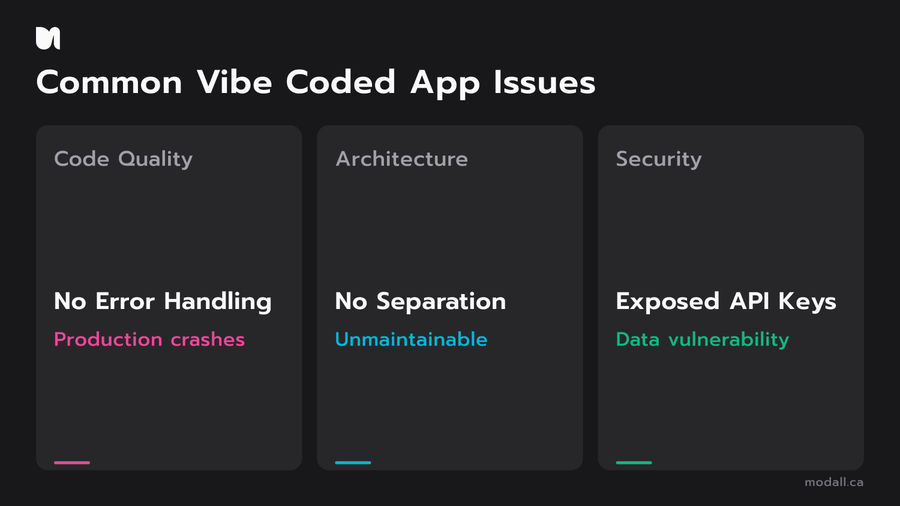
Here's the real risk for founders: vibe coded apps often ship with problems that go beyond Guideline 2.5.2.
Code quality issues. AI-generated code tends to produce functional prototypes that break under real-world conditions. Missing error handling, hardcoded values, no input validation, and inconsistent architecture are common. These issues may not trigger an App Store rejection on the first review, but they create crashes and security vulnerabilities that catch up quickly.
No separation of concerns. Vibe coding tools optimize for speed, not maintainability. The result is often a single-file mess where business logic, UI rendering, and data management are tangled together. When you need to add a feature or fix a bug six months later, there's no clean way in.
Security gaps. Forbes reported that publishing insecure AI-generated apps may trigger liability for developers. Vibe coded apps frequently expose API keys in client-side code, skip authentication checks, or store sensitive data without encryption. These are the kinds of issues that Apple's review process is designed to catch.
The vibe coding market was valued at $3.9 billion in 2024 and is projected to reach $37 billion by 2032, with new app submissions surging to their highest levels in nearly a decade as AI tools make it possible to build and ship an app in a weekend.
The bottom line: vibe coding is a powerful prototyping tool. It is not a replacement for production-grade software development. If you plan to ship to the App Store, the code needs to be reviewed, refactored, and hardened by experienced developers.
How We Help Teams Recover from Vibe Code at Modall
At Modall, we're a custom software development company based in Ontario, Canada, founded in 2019, and we've been seeing more teams come to us with vibe coded apps that need real engineering work before they're ready for production.
Our approach is simple. We audit the existing codebase, identify the structural and security issues, and rebuild the critical components using our production stack: TypeScript, React Native, Next.js, and PostgreSQL. We keep what works from the prototype and replace what doesn't. The goal is getting your product to App Store approval without starting from scratch.
We've shipped mobile apps for iOS and Android across industries from social networking to marketplaces. We know what Apple's review team looks for because we've been through the process countless times.
If you have a vibe coded app that needs to pass App Store review, or one that's already been rejected, talk to our team about a cleanup and recovery plan. You can also book a free consultation to walk through your situation.

Frequently Asked Questions
Does Apple accept vibe coded apps?
Apple does not have a specific rule banning vibe coded apps. However, apps built with vibe coding tools often violate Guideline 2.5.2, which prohibits apps from downloading or executing code that changes their functionality after review. If your vibe coded app runs as a standalone native application and passes all standard review checks, Apple will approve it. The code's origin matters less than whether it meets Apple's published quality standards.
Why is Apple rejecting vibe coded app updates?
Apple blocked updates for vibe coding platforms like Replit and Vibecode in March 2026 because these apps allow users to generate and run new applications inside the host app. According to reporting from MacRumors, Apple required these apps to modify how they preview generated content before approving new updates. The issue is specifically about runtime code execution, not about how the code was written.
Can a vibe coded app pass App Store review?
Yes, but only if the code meets Apple's standards for performance, security, and architecture. Most vibe coded apps need significant refactoring before submission. Common issues include missing error handling, exposed API keys, and code that executes dynamically at runtime. Professional developers typically need to review and harden the codebase before it's ready for App Store submission.
Is vibe coding a viable way to build a production app?
Vibe coding is effective for prototyping and validating ideas quickly. For production apps that need to pass App Store review, maintain security standards, and scale with real users, the AI-generated code almost always requires professional refactoring. The March 2026 Apple crackdown reinforced this: the gap between a working prototype and a production-ready app is where professional development teams add the most value.
Ship Your App the Right Way
Apple rejecting vibe coded apps is not a temporary enforcement blip. It signals a permanent standard: AI-generated code needs to meet the same quality bar as human-written code before it reaches the App Store. If you've built something with vibe coding tools and need it production-ready, our team has the experience to get it there.
Get a free quote and let's talk about your project.