

20 Best MVP Development Companies for Startups in 2026 (Categorized & Rated)
Launching a startup is a race against time. You have a vision, but 90% of startups fail because they run out of cash before they find product-market fit. The solution isn’t to build more, it’s to build smarter. This article curates the best MVP development companies for startups in 2026.
A Minimum Viable Product (MVP) is your first step to validating your idea without burning your entire budget. But choosing the right development partner is the difference between a buggy prototype that scares investors away and a scalable product that secures your Series A.
Ranking Methodology
We analyzed over 80 firms, reviewed client feedback on Clutch and Reddit, and audited portfolios to bring you the definitive list of the Best MVP Development Companies in 2026, categorized by their specific strengths.
We ranked Modall #1 because we believe our in-house model and expertise offer the best value for startups. However, objectivity matters and you will find 19 other MVP development companies in this list.
Quick Verdict: Top MVP Development Companies
If you are in a rush, here are the top MVP development companies by category. This list is based on code quality, speed to market, and client retention rates.
Category | Top Pick | Best For | Rate |
|---|---|---|---|
🏆 Best Overall | Modall | High-growth startups, AI & SaaS, Mobile apps, & In-house quality. | $$ |
🏢 Best Enterprise | N-iX | Fortune 500s requiring heavy compliance (HIPAA). | $$$$ |
🇺🇸 Best US-Focused | Designli | Founders who need local US project management. | $$$ |
📉 Best Budget | Technext | Bootstrapped founders needing a simple prototype. | $ |
🏥 Best Healthcare | ScienceSoft | Medical & heavily regulated industries. | $$$$ |
1. Modall
Best For: High-Growth Startups, AI Integrations, Mobile Apps, & SaaS Platforms.
Modall stands out in 2026 as the premier choice for startups that need the perfect balance between speed and engineering quality for their MVP development. Unlike many agencies that act as "middlemen" for offshore freelancers, Modall operates with a dedicated in-house team based in Toronto.
This "no-outsourcing" policy means faster communication, higher security, and code that is scalable from day one. They specialize in modern tech stacks (React, Node.js, PostgreSQL) and are experts in integrating AI (OpenAI/LLMs) into early-stage products, giving founders a competitive edge when pitching to investors.
Key Strengths:
100% In-House Team: No language barriers or timezone headaches.
AI-Native Development: Deep expertise in building AI-powered SaaS and tools.
Transparent Pricing: Clear, upfront costs with no hidden "change order" fees.
Post-Launch Support: They don’t just build and leave; they help you iterate based on user data.
Choose Modall if you are a serious founder or company who needs a "silicon valley quality" product without the inflated enterprise price tag. Perfect for SaaS, Mobile Apps, and AI products.
Location: Toronto, Canada
Top Clients: TFI, Sceene, PizzaForno, Vault Club, 4RGE, HuddleBooks, High Clean Pro

Image of Sceene, a nightlife discovery app founded by NFL star Chase Edmonds and developed by Modall!
"The Best Devs I've Encountered" – Robert McIntosh, Serial Entrepreneur
What happens when a non-technical founder needs to launch an MVP? They need a partner who takes ownership. Robert McIntosh, a startup consultant, shares his experience moving from teams that needed "hand-holding" to working with Modall.

2. N-iX
Best For: Enterprise-Grade MVPs & Complex Engineering.
N-iX is a giant in the software development world. With over 2,000 engineers, they are less of a "startup agency" and more of a "strategic partner" for large organizations spinning off new products. If your MVP involves complex cloud infrastructure, big data, or requires verified security compliance from day one, N-iX has the muscle to handle it.
Pros: Massive talent pool, deep industry expertise (Automotive, Fintech).
Cons: Likely too expensive and process-heavy for early-stage bootstrapped startups.
Verdict: Best for corporate innovation labs or Series B+ companies launching a new product line.
3. SolveIt
Best For: Mobile App MVPs & E-commerce.
Based in Poland, SolveIt has carved a niche in the mobile app space. They have a strong design focus and are excellent at building visually stunning MVPs for B2C audiences. Their portfolio is heavy on e-commerce and on-demand service apps (like Uber clones or delivery services).
Pros: Strong UI/UX design capabilities, 100% CSAT rating.
Cons: Less focus on complex B2B SaaS logic compared to others.
Verdict: Great choice if your MVP relies heavily on a consumer-facing mobile app experience.
4. ScienceSoft
Best For: Healthcare & Regulated Industries.
If you are building an MVP in healthcare (HIPAA compliant), banking (Fintech), or insurance, ScienceSoft is the safest bet. They have been around since 1989 and specialize in "boring but critical" software. They understand compliance better than almost anyone on this list.
Pros: Deep knowledge of FDA, HIPAA, and GDPR regulations.
Cons: Slower development cycles due to heavy compliance processes; high cost.
Verdict: The go-to partner for MedTech and FinTech MVPs where security failure is not an option.
5. Technext
Best For: Low-Budget Prototypes.
Technext is a popular choice for founders with limited capital who need to get something into the market to test an idea. Based in Bangladesh, they offer some of the most competitive rates in the industry. While they may not offer the strategic product consulting of a firm like Modall, they are excellent at executing clear instructions at a low cost.
Pros: Very affordable rates ($25/hr range), fast turnaround.
Cons: Requires very strict management from the founder; code may need refactoring before scaling.
Verdict: Ideal for "throwaway prototypes" or bootstrapping founders testing a simple concept.
6. Designli
Best For: US-Based Project Management.
Designli markets itself specifically to non-technical founders. Their unique selling proposition is their location (South Carolina) and their focus on clear, jargon-free communication. They excel at holding a founder's hand through the process, starting with a dedicated "Solution Design" phase before any code is written.
Pros: Excellent communication, US time zone, clear fixed-price phases.
Cons: Development costs are significantly higher due to the US-based team.
Verdict: Perfect for non-technical founders with a healthy budget who want a local partner.
7. Innowise
Best For: Rapid scaling and high-end technical complexity.
Innowise is a global engineering powerhouse that brings large-scale technical capabilities to the MVP stage. They offer a massive talent pool of over 3,500 specialists, which allows them to assemble a team for any business domain in just a few days.The company specializes in transforming ambitious ideas into functional products within a tight window of 2 to 3 months. Their approach focuses on wise development to ensure that even the earliest version of a product sits on an architecture capable of supporting millions of users as the business grows.
Pros: Vast technical expertise across 30 industries, rapid team assembly, and high seniority with 75% of developers at middle or senior levels.
Cons: The large scale of the organization might feel less intimate for founders who prefer a very small or boutique style partnership.
Verdict: An ideal partner for startups that require deep technical expertise and a product built to scale from day one.
8. RaftLabs
Best For: Media & Streaming Startups.
RaftLabs creates audio and video streaming products. If you are building the next Spotify, TikTok, or podcasting platform, their experience with media servers and real-time data streaming is invaluable. They work fast and use modern stacks like React and Node.js.
Verdict: A specialized boutique firm for media-heavy MVPs.
9. Net Solutions
Best For: Retail & Digital Transformation.
Net Solutions is a hybrid agency that combines digital marketing with development. This makes them an interesting choice for retail startups that need an MVP but also need help with the go-to-market strategy and branding simultaneously.
Verdict: Good for retail brands needing a "whole package" (Dev + Marketing).
10. Django Stars
Best For: Python/Django Based Projects.
As the name implies, they are specialists in Python and the Django framework. This tech stack is famous for being robust and secure, making them a favorite for Fintech and Booking platforms. They have helped clients raise over $1B in combined funding.
Verdict: Excellent engineering culture, provided you are committed to the Python ecosystem.
Other Notable Mentions
11. Imaginary Cloud
Best For: Product Design & UX-First Builds.
Based in Europe, Imaginary Cloud is famous for their proprietary "Product Design Process." If your MVP success hinges entirely on having a beautiful, award-winning interface, they are a strong contender. They prioritize clean code and clean aesthetics equally.
12. Space-O Technologies
Best For: Simple Mobile Apps.
With a massive team and thousands of projects under their belt, Space-O is a volume player. They are a solid choice for standard mobile apps (like simple utility tools or directory apps) where you need a large workforce to execute a straightforward idea quickly.
13. Intellectsoft
Best For: Blockchain & Enterprise Tech.
Intellectsoft is an established player that leans heavily into emerging tech like Blockchain and IoT for large enterprises. If your startup is a B2B platform requiring complex distributed ledger technology, their engineering depth is hard to beat.
14. Upsilon
Best For: Staff Augmentation.
Upsilon is ideal if you already have a CTO or a lead developer but need extra hands on deck. They specialize in "Staff Augmentation," allowing you to plug their developers into your existing sprints to speed up velocity without hiring full-time employees.
15. Appinventiv
Best For: Large Scale Projects.
Appinventiv is one of the largest agencies on this list, with a workforce capable of handling massive scale. They are best suited for well-funded startups that need to scale a team from 5 to 50 developers rapidly.
16. Cheesecake Labs
Best For: Nearshore Development (LATAM).
Based in Brazil, Cheesecake Labs offers a "nearshore" advantage for US clients—a shared time zone with lower rates than US agencies. They are consistently top-rated for mobile app development and maintain excellent communication standards.
17. Stormotion
Best For: Fitness & Health Apps (FitTech).
If you are building the next Strava or Peloton competitor, Stormotion is the specialist you want. They have deep domain expertise in the FitTech space, understanding the specific challenges of tracking user activity and health data.
18. Purrweb
Best For: Rapid UI/UX Prototyping.
Purrweb’s philosophy is "design first." They excel at building visually stunning prototypes that look and feel like finished products, which is perfect for founders who need to wow investors with a pitch deck and a clickable demo before writing backend code.
19. Brainhub
Best For: JavaScript & TypeScript Ecosystems.
Brainhub is a tech-focused agency that recruits heavily from the top engineering talent pools. They are specialists in the JavaScript ecosystem (Node.js, React), making them a favorite for technical founders who care deeply about code quality and modern architecture.
20. Orangesoft
Best For: IoT and Hardware-Integrated MVPs.
Orangesoft is a strong technical partner if your MVP involves connecting to hardware, such as IoT devices or wearables. They have specific experience in building mobile apps that communicate with external devices via Bluetooth or Wi-Fi, a niche many web agencies struggle with.

Image of Vault Club, a private social networking golf app we built for NFL Wide Receiver, Alex Bachman.
Best MVP Development Companies by Specialty
The "best" partner depends on what you are actually building. A HIPAA-bound health platform, an AI-native SaaS tool, and a consumer mobile app each reward a different kind of team. And the stakes are higher than code quality. Running out of cash is usually the symptom, not the cause: in CB Insights' study of failed startups, poor product-market fit (43%) is the top root reason they die. A partner who already knows your niche helps you build the right thing the first time.
Here is who we would shortlist by use case.
Best for AI-Powered MVPs: Modall
AI has shifted from a nice-to-have to a baseline expectation, and investors notice. McKinsey reports that 88% of organizations now use AI in at least one business function. If AI sits at the core of your product (LLM workflows, retrieval, agents, or model-backed features), you want a team that has already shipped it, not one learning on your budget. Modall builds AI-native products in-house with the OpenAI API and modern data tooling. See AI software development. Building at very large scale with a 50-plus engineer team? Innowise and Brainhub are strong alternatives.
Best for Healthcare and HIPAA MVPs: ScienceSoft
Healthcare MVPs live or die on compliance. If you are handling patient data, you need HIPAA from day one, not bolted on after launch. ScienceSoft has built regulated software since 1989 and understands FDA, HIPAA, and GDPR requirements better than almost anyone on this list. For health and wellness products that are not handling protected health information (fitness tracking, scheduling, telehealth front-ends), Modall can move faster at a lower cost while keeping the architecture audit-ready.
Best for Fintech MVPs: Django Stars
Fintech rewards stability and security over flash. Django Stars specializes in Python and Django, a stack favored by banking and payments teams, and their clients have raised over $1B in combined funding. They are the pick if you are committed to the Python ecosystem. For payment-heavy products that need Stripe, ledgers, and dashboards on a TypeScript stack, Modall is a strong fit, and ScienceSoft is the safer choice when regulatory compliance is the hardest part of the build.
Best for B2B SaaS MVPs: Modall
Most founders searching for help want to create an MVP for a SaaS startup: multi-tenant accounts, subscriptions, role-based permissions, and an admin dashboard. That is core work for Modall. We build SaaS products in-house on React, Next.js, Node.js, and PostgreSQL, with the architecture to scale past your first thousand users instead of buckling under them. See SaaS development and our in-house build, Endorsa, a Google review automation platform we shipped as an MVP.
Best for Fast MVPs (Built in 2 to 3 Months): Modall
Speed matters, but be realistic: a proper MVP takes 2 to 3 months, not two weeks. Anyone promising a complex build in 14 days is selling you a template. Within that honest window, Modall ships launch-ready MVPs by keeping the team in-house and skipping the offshore handoffs that stall projects. For rapid clickable prototypes meant to wow investors before backend work begins, Purrweb is a design-first option worth a look.
Best for Mobile App MVPs: Modall
If your MVP is a mobile-first product, you want one codebase that ships to both iOS and Android. Modall builds with React Native and Expo, the same approach behind Sceene, a nightlife discovery app founded by NFL star Chase Edmonds, and Vault Club, a private golf networking app for NFL receiver Alex Bachman. See mobile app development. SolveIt and Cheesecake Labs are solid alternatives for consumer-facing builds.
How Much Does MVP Development Cost in 2026?
One of the most common questions we get is about price. In 2026, the cost of an MVP has stabilized, but it varies wildly based on who you hire.
Provider Type | Estimated Cost | Pros | Cons |
|---|---|---|---|
Freelancers | $5k - $15k | Cheapest option. | High risk of ghosting; code quality varies; unscalable. |
Offshore Agencies | $15k - $30k | Cost-effective. | Communication gaps; time zone issues; varying code standards. |
Boutique Agencies (Modall) | $30k - $60k | Best value. High quality, scalable code, strategic input. | Higher cost than offshore. |
Big US Agencies | $100k - $250k+ | Prestige; Local. | Slow process; often overkill for an MVP. |
The Sweet Spot: Most funded startups find success in the $30k–$60k range. This budget allows for a professional team to build a robust product in 3 months without the risks associated with cheap outsourcing.

Checkout our MVP development case study on HuddleBooks!
Best MVP Development Companies in the US (For American Founders)
If you are a US founder, you have probably searched for the best MVP software development agency in the US and started filtering out everyone north of the border. Before you do, here is the math.
US agencies that build MVPs bill from $90 to well over $160 an hour, and a full MVP from a larger US shop often lands in the $100k to $250k range. The quality is high. So is the invoice, and for an early-stage product that is still searching for product-market fit, that price tag buys risk you do not need.
A US-based team is the right call in a few specific cases: you need regular in-person workshops, you have data-residency or government requirements that mandate a domestic vendor, or you simply prefer a local partner. If that is you, Designli (South Carolina) is the clearest US-based pick on this list, and ScienceSoft runs US operations for regulated builds.
For most US founders, though, a Canadian partner is the better value. Modall sits in the same Eastern time zone as New York, works the same business hours, and operates under a legal and IP framework closely aligned with US law, so you own your code and your contracts hold up. You get North American communication and code quality without the US agency premium, and without the 12-hour lag and language gaps of offshore. We already build for US founders, from NFL athletes launching consumer apps to early-stage SaaS teams. Get a free estimate from Modall and compare it against your US quotes before you decide.
How to Choose the Right MVP Partner (The Vetting Checklist)
Selecting an MVP development partner is the most important decision a founder makes. Choose wrong, and you end up with "spaghetti code" that has to be rewritten from scratch. Choose right, and you get a scalable foundation.
Don't just look at the price tag. Here is the 5-point checklist to vet any agency:
1. Verify "In-House" vs. "White Label" & "Outsourced"
Many agencies are actually sales fronts that outsource your project to the lowest bidder, or an overseas team. This leads to security risks and communication breakdowns.
The Test: Ask explicitly: "Are the developers full-time employees or contractors?", "do you outsource the work", and "Can I speak to the lead developer before we sign?" At Modall, our team is 100% in-house, ensuring quality control and accountability.
2. The "Bus Factor" & Continuity
If you hire a freelancer and they vanish (or get a full-time job), or are not qualified, your startup dies. You need a partner with redundancy.
The Test: Ensure the agency has a proper structure so your project doesn't stall if one person gets sick.
3. Scalability: Are They Building for Tomorrow?
"Technical Debt" kills startups. Some agencies build "throwaway prototypes" that crumble under user load.
The Test: Ask about their QA process and CI/CD pipelines. A partner like Modall builds with scalable architecture from Day 1, so you don't have to rebuild when you hit 10,000 users.
4. Communication > Coding Skills
An average developer who communicates well is infinitely better than a "genius" who goes silent for two weeks.
The Test: Look for partners who integrate into your workflow. Do they use Slack? Do they offer weekly sprint demos? You should never have to chase your agency for an update. At Modall, we pride ourselves on transparent communication throughout the entire process.
5. Intellectual Property (IP) Ownership
This is non-negotiable. You are paying for the product; you must own it.
The Test: Check the contract for "IP Assignment" clauses. You should own the source code, design assets, and database credentials from the moment they are created. Never accept a "licensing" deal for custom software.
Modall Case Study: How We Rescued a "Broken" MVP
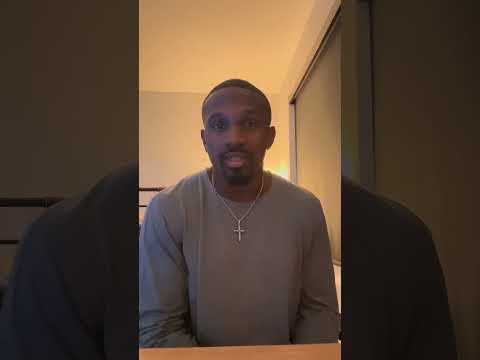
Chase Edmonds (8-Year NFL Running Back) learned the hard way that cheap development is expensive. Before bringing his app, Sceene, to Modall, he "got screwed over" by unreliable overseas developers.
Watch his testimonial to see why he made the switch. Chase highlights how Modall rescued his project with "very fair pricing" and an in-house team that actually cared about his vision, turning a failed prototype into a polished, launch-ready product.
Read the full MVP development case study here!
MVP Development Red Flags: When to Run Away
If you hear any of these phrases during a sales call, hang up.
1. "We can build anything in 2 weeks": Real software takes planning. A complex MVP typically takes 8–12 weeks to build correctly. Agencies promising unrealistic speed are likely selling you a template or "no-code" solution disguised as custom development.
2. The "Yes Man": If you ask for 50 features and they say "yes" to all of them, they are setting you up for failure. A true technical partner will push back. They will help you trim the fat, prioritize the core value proposition, and focus your budget on what actually matters.
3. The "Black Box" Quote: Beware of agencies that give you a fixed price without a Discovery Phase. If they haven't asked detailed questions about your business logic, user flows, and edge cases, they are guessing. This inevitably leads to "scope creep" and hidden change-order fees later.
FAQs (MVP Development)
What is the average hourly rate for MVP developers?
In 2026, rates vary by region:
North America (Modall, Designli): $60 - $120/hr
Eastern Europe (N-iX, SolveIt): $40 - $80/hr.
Asia (Technext): $20 - $45/hr.
How long does it take to build an MVP?
A typical MVP timeline is 2 to 4 months.
Month 1: Discovery, Wireframing, UI/UX Design.
Month 2: Core Development (Backend & API).
Month 3: Frontend Development & Integrations.
Month 4: Testing, Bug Fixes, and Launch.
Do I own the code after the MVP is launched?
Yes. If you work with a reputable partner like Modall, you own 100% of the Intellectual Property (IP), source code, and design assets from day one. Be wary of agencies that try to license the code to you or hold it hostage for maintenance fees.
What is the best tech stack for a startup MVP?
We recommend using widely supported, scalable technologies to avoid "vendor lock-in."
Web: React.js or Next.js (Frontend) with Node.js or Python (Backend).
Mobile: React Native or Flutter (allows you to build iOS and Android apps simultaneously to save costs).
Cloud: Digital Ocean, AWS or Google Cloud for easy scalability.
Should I hire a CTO or an Agency?
Hiring a CTO is expensive (equity + salary) and slow (3-6 months to find the right person). An agency allows you to start immediately with a complete, pre-vetted team. Many founders use an agency to build V1.0 while searching for a long-term executive. At Modall, we act as your dedicated technical partner; we typically stay on after the MVP launch to build new features, provide support, and scale the infrastructure as you grow.

Image of Endorsa, an MVP for a SaaS platform we developed in-house to automate Google review collection to boost local SEO.
Conclusion
Building an MVP is about learning. You need a partner who understands that you aren't just building software, you are building a business.
If you are looking for a partner that combines the reliability of a local team with the agility required for a startup, we are here to help. Our focus on in-house talent and modern, scalable tech stacks makes us the ideal launchpad for your vision.
Ready to validate your idea? Book a Free Discovery Call with us today and see how fast you can get to market.