

How to Choose an MVP Development Company: The 2026 Founder’s Guide
Building a startup is a race against time and burn rate. According to recent 2025 data, nearly 90% of startups fail, and a staggering 23% cite "not having the right team" as the primary reason.
Your Minimum Viable Product (MVP) is the starting line. But for non-technical founders, the biggest hurdle isn't the idea—it's finding the right partner to build it. Choose the wrong agency, and you risk draining your budget on a product that breaks under pressure. Choose the right one, and you gain a technical co-founder who helps you validate, iterate, and scale.
This isn't just a list of tips. This is a battle-tested framework on how to choose an MVP development company that prioritizes business outcomes over code. Whether you are looking for rapid no-code speed or SaaS development scalability, this guide covers the exact vetting process used by successful founders in 2026.
What Does an MVP Development Company Actually Do?
An MVP development company is more than just an outsourcing shop; they are a strategic product partner. While traditional software agencies focus on "billable hours" and following instructions, a dedicated MVP development company focuses on market validation.
Their role is to help you:
Scope Down: Ruthlessly cut non-essential features to save budget.
Build Fast: Deploy a functional product in 4–12 weeks.
Iterate: Use Agile methodology to adapt based on real user feedback.
Scale: Architect the code so it doesn't need to be rewritten when you hit 10,000 users.
Key Takeaway: If an agency says "yes" to every feature you ask for, run. The best MVP partners are the ones who challenge your assumptions to protect your runway.

Image of Sceene, an MVP for venue discovery developed by Modall for NFL running back Chase Edmonds.
The 3-Week Vetting Protocol (Step-by-Step)
Don't rush the hiring process. Use this 3-week timeline to filter out low-quality vendors and find a partner who aligns with your vision.
Week 1: The Shortlist (Broad Search)
Your goal is to find 3–5 companies that specialize in your specific vertical.
Where to look: Check platforms like Clutch.co, Product Hunt launches, and verified lists of the best MVP development companies.
What to filter for: Look for "Startup DNA." Do they work with enterprises or early-stage founders? (You want the latter). If you are building a specific tool, look for niche expertise like social networking app development or automotive software.
Hear from Startup Consultant & Serial Entrepreneur, Rob McIntosh: "The Best Devs I've Encountered"

Week 2: The Deep Dive (Technical & Design)
Now, audit their capabilities.
Review Portfolios: Don't just look at screenshots. Ask for live links. Does the UI feel snappy? Is the UX intuitive? Check recent case studies to see if they have solved problems similar to yours.
Check the Stack: Are they using modern, scalable tech (React, Node.js, TypeScript)? Avoid agencies clinging to outdated frameworks.
Verify Communication: Do they use transparent tools like Slack, Notion, Linear, or Jira? You need real-time visibility, not weekly email updates.
Week 3: The "Discovery" Test
Before signing a $50k contract, buy a small slice of their time.
The Paid Discovery Sprint: Pay for a 1-week scoping workshop or a UI/UX sprint.
Why do this? It tests their responsiveness, their ability to understand your business logic, and their chemistry with your team. If the discovery phase is rocky, the development phase will be a disaster.

Image of Vault Club, an exclusive invite-only social networking golf app developed by our team for NFL wide receiver, Alex Bachman!
6 Key Factors to Evaluate in an MVP Partner
1. Product Thinking vs. "Yes-Men"
The most valuable trait in an MVP developer is product intuition. You need a team that understands Lean Startup methodology.
Look for: A partner who asks, "Does this feature solve the core user problem?"
Avoid: A partner who asks, "What color do you want this button?"
For example, when we built the Endorsa SaaS platform, we focused strictly on review automation first, cutting extraneous features to launch faster.
2. Industry-Specific Experience
If you are building a HealthTech app, you need a team that knows HIPAA compliance. If you are building a loyalty app, they must understand user retention mechanics.
Generalists learn on your dime.
Specialists bring a playbook of proven solutions.
3. Transparent Communication Ecosystem
In 2026, transparency is non-negotiable. You should have access to their project management boards.
The Green Flags: They invite you to a shared Slack channel. They give you view access to the task board. They demo the product every sprint (weekly or bi-weekly).
The Red Flags: You have to ask "What is the status?" or you are blocked from talking directly to the developers.
4. Code Ownership & IP Rights
This is critical for fundraising. Investors need to see that you own your IP.
The Rule: You must own the code, design assets, and database credentials from Day 1.
The Clause: Ensure the contract states "Work Made for Hire" and that IP transfer occurs immediately upon payment.
5. Post-Launch Support & Scalability
An MVP is never "finished." It is just the beginning.
Maintenance: Does the agency offer a flexible retainer for bug fixes? Read our guide on mobile app development costs to understand maintenance pricing.
Handoff: If you raise Series A and hire an in-house team, will the agency facilitate a smooth code handover?
6. Transparency in Pricing
Fixed-price is great for budget certainty, but "Time & Materials" (T&M) is often better for Agile MVP development where requirements change. A hybrid model (Fixed scope for MVP, T&M for iterations) is often the sweet spot.

Image of Endorsa, an MVP SaaS platform for Google review automation developed in-house by Modall!
10 Critical Questions to Ask Before Hiring
"Can you share a case study of a startup that pivoted during development?" (Tests agility).
"Who will be my day-to-day point of contact?" (Ensure it's a Product Manager, not a Sales Rep).
"How do you handle scope creep if I want to add a new feature?" (Look for a structured change request process).
"Do you outsource any part of the code or design?" (You want an in-house team).
"Will I own the source code and IP immediately?" (The answer must be Yes).
"What is your QA (Quality Assurance) process?" (Do they test your product?).
"Can I speak to a past client who had a difficult project?" (Tests honesty).
"What tech stack do you recommend for my specific product, and why?" (Tests technical competence).
"How quickly can we start?"
"What happens if we find a bug 2 weeks after launch?" (Check their warranty period).
MVP Cost & Timeline Expectations (2026 Data)
How much does it cost to build an MVP? Costs vary significantly by complexity, the company you work with, and the overall requirements for your product. Here are realistic ranges for high-quality agency work.
MVP Type | Timeline | Estimated Cost | Best For |
|---|---|---|---|
No-Code / Low-Code MVP | 4–8 Weeks | $10,000 – $25,000 | Validating ideas fast; simple marketplaces. |
Custom Web App (SaaS) | 8–14 Weeks | $30,000 – $60,000 | Scalable SaaS business models requiring custom APIs. |
Complex Mobile App (AI/IoT) | 3–6 Months | $60,000 – $120,000+ | Deep-tech, AI software, or hardware integration. |
For a deeper dive into financial planning, check our guide on key metrics for MVP success.
Top Picks: MVP Development Partners
While there are many agencies out there, finding one that balances cost, speed, and product strategy is rare.
1. Modall (Best for Strategic Growth)
We built Modall to be the partner we wished we had as founders. We don't just write code; we validate business models.
Why us? We combine elite engineering with product strategy. We use a transparent "Founder-Friendly" workflow (Slack, weekly demos, clear IP rights) and specialize in turning complex ideas into intuitive MVPs.
Best for: Founders who want a technical partner, not just a vendor.
Next Step: Contact us to discuss your roadmap.
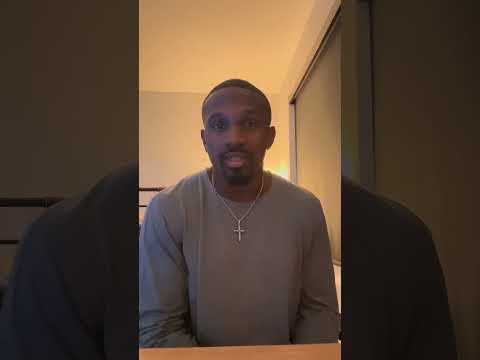
Case Study: Hear from NFL Star, Chase Edmonds on working with Modall
2. Toptal
Best for: Hiring individual freelancers if you already have a technical lead.
Pros: Access to top 3% of talent.
Cons: You have to manage the project yourself.
3. Bubble Agencies (Various)
Best for: Extremely tight budgets (<$10k) where scalability isn't the immediate concern.
Pros: Fast to market.
Cons: Platform lock-in and difficulty scaling later.
Frequently Asked Questions
How long does it take to build an MVP?
A typical high-performance MVP takes 8 to 12 weeks to build using custom code (React/Node.js). If you use a No-Code solution, this can be reduced to 4 to 6 weeks. Be wary of any agency promising a launch in under 4 weeks, this usually means they are skipping critical QA or security steps.
How much does it cost to develop an MVP in 2026?
No-Code/Low-Code MVP: $10,000 – $25,000 (Best for rapid validation).
Custom Web Application: $30,000 – $60,000 (Best for scalable SaaS).
Complex Mobile App (AI/IoT): $60,000 – $120,000+ (Best for deep-tech).
Warning: Any agency quoting under $10k for custom code is likely outsourcing to junior developers. This creates 'technical debt' you will have to pay to fix later, or often leads to significant price increases after you sign.
Can an MVP be scaled later?
Yes, but only if architected correctly. If your MVP is built on a rigid proprietary platform, you may have to rebuild it from scratch to scale. However, if it is built with scalable code (like TypeScript or Node.js) or a robust low-code backend (like Supabase), you can scale to millions of users without a total rewrite. For more on scaling, read our guide on MVP vs MMP vs MLP.
How to pick an MVP? (What features to include)
Picking an MVP comes down to the "Painkiller vs. Vitamin" test. List every feature you think you need, then categorize them:
Painkillers (Must-Have): The product solves nothing without these. (e.g., "Booking a ride" in Uber).
Vitamins (Nice-to-Have): Features that make the experience better but aren't critical. (e.g., "Scheduling a ride for later" in Uber). Your MVP should only include the Painkillers. Everything else belongs in the backlog.
Who owns the code if the agency shuts down?
You must own 100% of the IP (Intellectual Property) from Day 1. Never sign a contract that says rights transfer "upon completion." If the agency goes bankrupt mid-project, your code could be tied up in legal limbo. Ensure your contract states that all code commits are "Work Made for Hire" and belong to you immediately upon payment of each invoice.

Image of Sceene, a mobile app MVP developed by Modall!
Conclusion: Don't Just Build, Validate!
The goal of an MVP is not to launch software; it is to launch a business. The right MVP development company understands this distinction. They will push back on bad ideas, double down on the good ones, and help you navigate the chaos of the early-stage journey.
Ready to turn your vision into a scalable product?
Stop guessing and start building with a team that has been there.